
How AI is shaping organizations, collaboration and decision-marking
How is AI currently changing retail organizations? And what does this mean for roles, collaboration and decision-making?
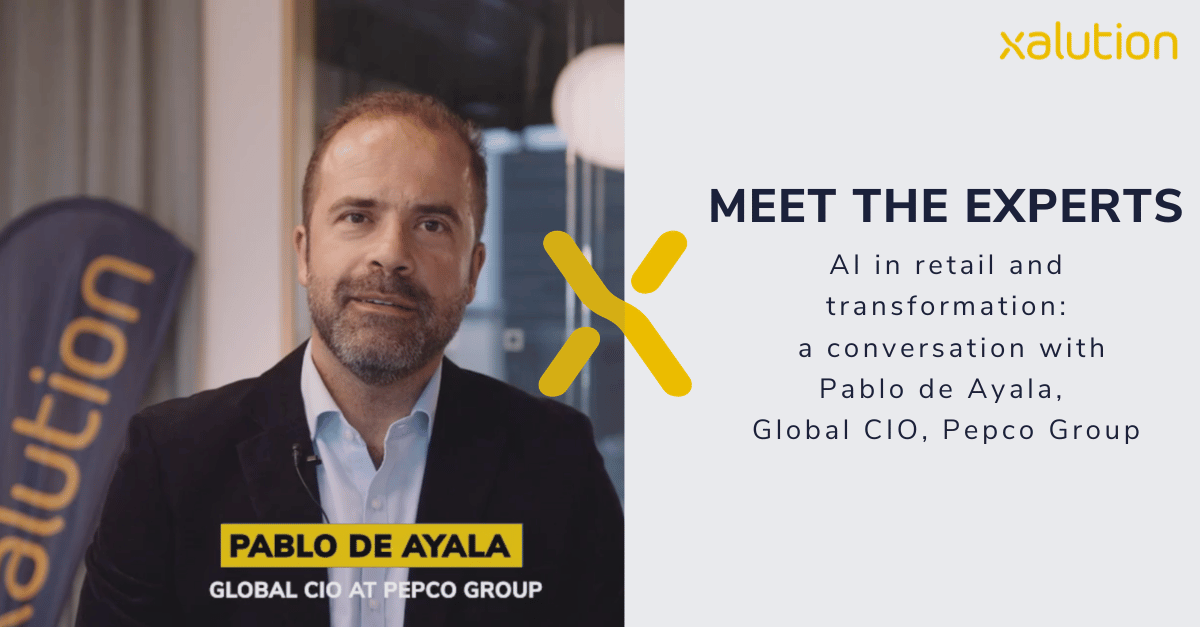
As part of our Meet the Experts series, we spoke with Pablo de Ayala, Global CIO at Pepco Group, at the x4in summit in Prague, where he also joined the event a speaker. Pepco Group is a leading pan-European discount retail group, operating more than 4.000 stores across Europe.
Watch the full video interview below:
AI in retail: more than automation
In the conversation, Pablo de Ayala describes AI as a development that goes beyond automating individual tasks.
It is already influencing how people interact with technology and how organizations operate. At the same time, the role of human interaction becomes increasingly relevant.
Changing roles in organizations
AI is expected to reshape how work is structured.
Existing roles are evolving, while new responsibilities are emerging. How this balance will develop is still open, but it is already clear that organizations need to actively address these changes.
Transformation requires more than technology
Using Pepco as an example, the conversation touches on how transformation is approached in practice.
Rather than focusing on individual tools, the emphasis is on a broader shift across technology, organization and ways of working.
Where technology creates real value
Not every technology investment delivers the expected impact.
One area stands out: communication and coordination across teams. Especially in distributed retail organizations, this can make a measurable difference.
Mr. de Ayala, thank you so much for the so insightful conversation.
—
Related content
As part of the Pepco Group environment, xalution recently delivered a large-scale ERP transformation for Dealz Poland.
ERP in Retail: Microsoft Dynamics 365 at Dealz Poland: Read more
In less than eight months, Microsoft Dynamics 365 Finance & Supply Chain Management was successfully rolled out across nearly 350 stores, creating a scalable and independent ERP foundation.